


About charcuterie
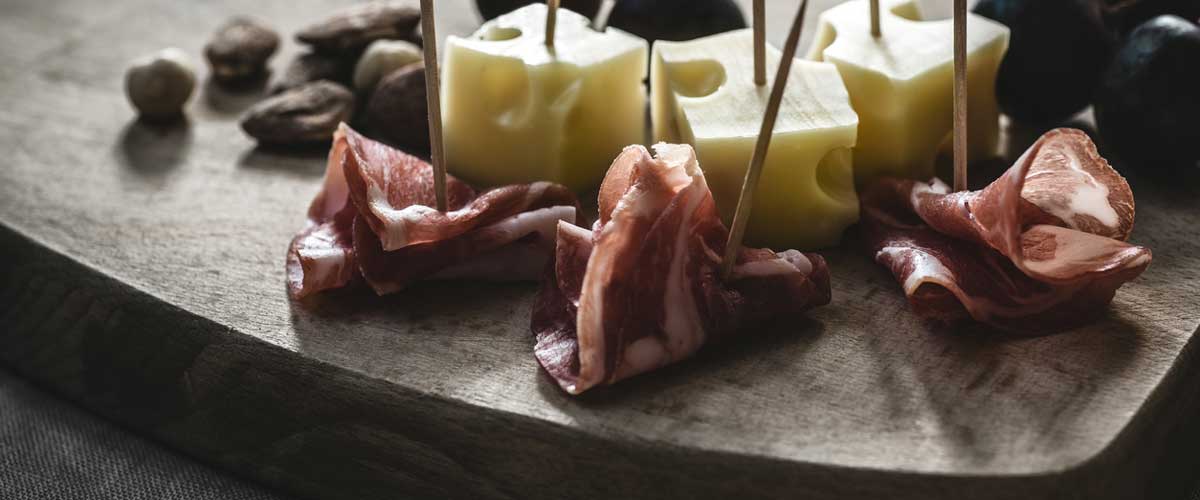
How to properly put together an aperitif board?
Putting together a great aperitif board starts with choosing the base — wood, slate or marble — suited to the number of guests. Charcuterie, cheeses, crackers, fresh and dried fruit, gherkins and olives make up the essentials, with a few decorative touches. Our styling tips show you the order in which to arrange dishes, cheeses and charcuterie for a board that's as beautiful as it is delicious....
03
What is the average weight of a saucisson?
A dry saucisson usually weighs between 150 and 300 grams, while a fresh or cooked saucisson is generally heavier, between 400 and 600 grams. We explain what drives these differences by type and how to compare them at a glance....
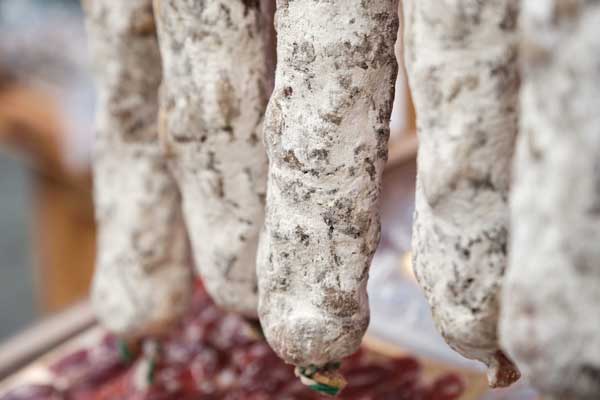
How and how long to store a dry saucisson?
A dry saucisson keeps for several months provided it is kept in a dry, ventilated place between 12 and 20°C. We explain the storage options — open air, saucisson box, fridge or freezer — and how to tell a normal bloom from a sign of spoilage....
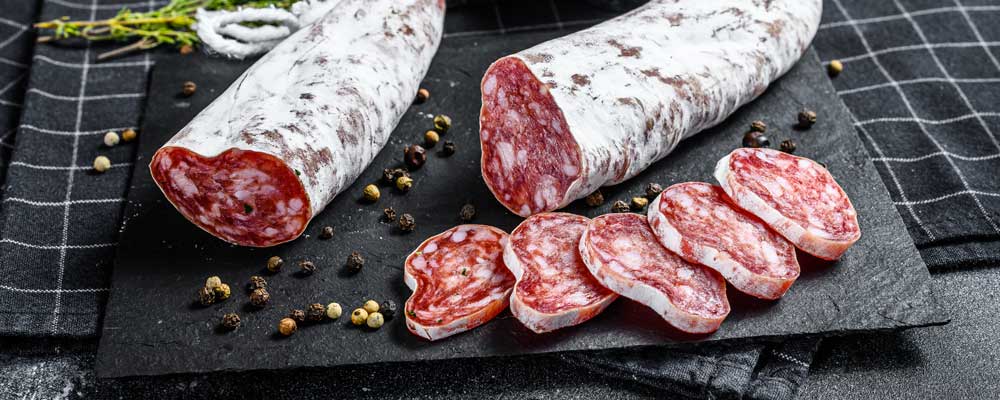
How is Catalan fuet made?
Born in Catalonia in the Baroque era, fuet gets its name from its shape, like a whip. We explain the ingredients, the exact stages of making it and the drying time, from trimming the meat to the finished, ready-to-eat fuet....
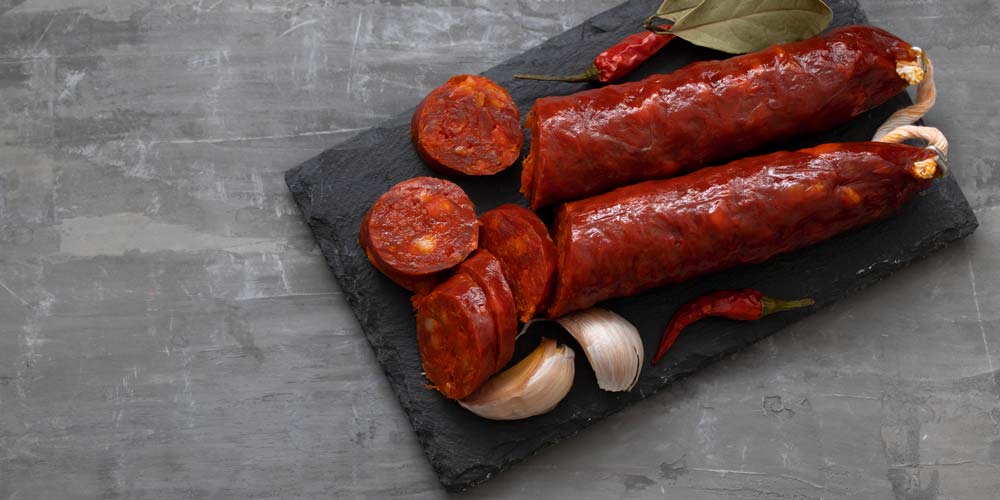
How is chorizo made?
Chorizo is a Spanish saucisson made from pork, paprika and other spices. We explain the ingredients, the making steps — trimming, mincing, filling, drying — and a few recipes to try with it....
02
What is saucisson desiccation?
Desiccation is the drying process that gives dry saucisson its firm texture and concentrated aromas. After salting, the saucisson is hung in air, at around 10°C and up to 80% humidity, where it gradually loses its water and weight. We explain how this drying continues after making and how many grams a saucisson can lose....
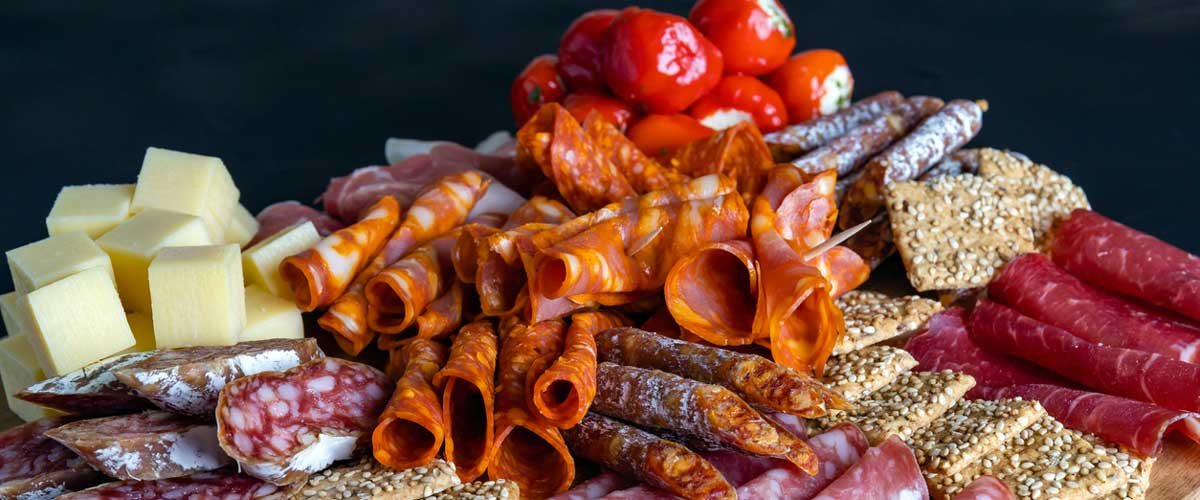
The different types of Iberian charcuterie
Iberian charcuterie comes from black pigs raised freely in south-west Spain, an origin that explains its very distinctive flavour. Jamón ibérico de Bellota, Cebo de Campo or Recebo, presa, lomo: each cut has its own characteristics and designations of origin. This overview helps you tell apart the main families of Spanish charcuterie....
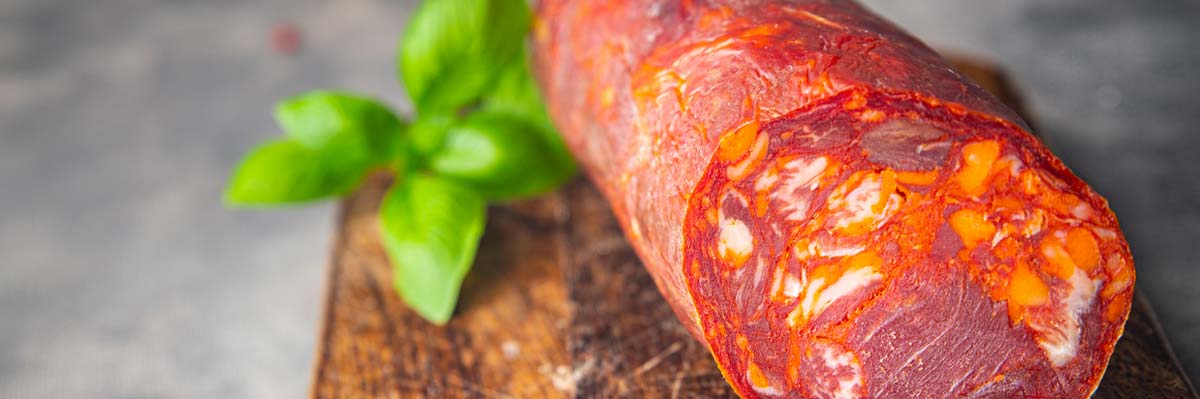
How to store opened chorizo?
Once opened, chorizo keeps for two to three weeks in the fridge if well wrapped, and eight to ten months in the freezer. We detail the right way to wrap it, mistakes to avoid such as refreezing, and the signs that show a chorizo is no longer fit to eat. You'll also find out how long to keep a dry chorizo after opening....

Give charcuterie for Valentine's Day
For Valentine's Day, quality charcuterie makes an original gift, a change from jewellery and flowers. Bone-in Serrano ham with its stand, saucisson assortments, terrines and rillettes: there's no shortage of ideas to surprise someone. You can even put together a bespoke gift basket with your loved one's favourite products....
01
What is a curing house?
A curing house is both the process for preserving meat by salt and the workshop where saucissons, hams and dried charcuterie are made. Salting, drying, curing: we detail the three stages, the difference between a curing house and charcuterie, and the meats suited to it....
Receive our new products, our tips and our promotions directly in your email box
You may well receive a surprise when you subscribe... 🤞
We will only send you information related to our site, only twice a month, and you can unsubscribe at any time!